What is IOP?
Organised by UCA International Users Group and presented by UCA Testing, the Interoperability Testing Event (IOP) examines how IEC 61850 implementations work together in an engineered system. The aim is to identify integration problems and support corrective work before deployment.
The 2026 event takes place at Jaarbeurs in Utrecht, Netherlands: setup ran from 7 to 11 October, followed by testing from 12 to 16 October.
The 2026 testing programme
The published scope covers ten areas:
-
Engineering processes
-
Basic Application Profiles (BAPs) for application and functional testing
-
Configuration
-
Control-centre-to-substation communication
-
Remote terminal unit (RTU) and proxy testing
-
Cybersecurity
-
Communication within and between substations using GOOSE and routable GOOSE
-
IEC 61850 synchrophasors
-
Ethernet resilience
-
Time synchronisation using Precision Time Protocol (PTP)
The on-site guide identifies specific applications, including bus differential protection, interlocking, synchronism checking, voltage regulation, single-pole tripping and autoreclose, R-GOOSE line protection and Sampled Values redundancy. Engineering activities cover System Specification Description (SSD) to System Configuration Description (SCD) files, with XML Schema Definition (XSD) and Object Constraint Language (OCL) validation.
Three BAP networks support parallel testing and reconfiguration. The attendee agenda schedules the remaining tests for Friday morning, 16 October, before equipment dismantling begins at noon.
Participants
The networking group comprises ATOP, Belden, BitStream, Cisco, Moxa, Nokia, Phoenix Contact, SEL, Siemens-RUGGEDCOM and Westermo, according to Moxa’s Raymond Shieh.
Other organisations reporting participation include ASE, CONPROVE, COPA-DATA, Grid to Great and Welotec. This is a partial list. UCA International Users Group reports more than 200 attendees; UCA president Ryan Willcockson identifies more than 30 organisations.
Latest reports from Utrecht
Functional testing. On 12 October, ASE’s Sterin Jose reported the transition from individual-device checks to larger-scale functional tests. On 13 October, Martin Tetteroo of Croonwolter&dros described successful line trips with autoreclose, with a Triangle MicroWorks simulation tool acting as a virtual IED. He also reported GOOSE and Sampled Values reaching protection IEDs and the use of SISCO’s diagnostic tool to inspect Substation B.
Communications and virtualised protection. Westermo reports that its engineers helped build the test network (Fig. 1). In a 14 October update, Welotec’s Anton Krupskii identifies Westermo RedFox equipment in the interoperability tests and a Welotec RSAPC Mk2 computer hosting Siemens SIPROTEC V.
Network engineering. Reporting on the second testing day, 13 October, Moxa’s Raymond Shieh describes a demonstration based on IEC TR 61850-90-22: incorporating network information into the SCL engineering workflow and configuring network devices from the SCD file.
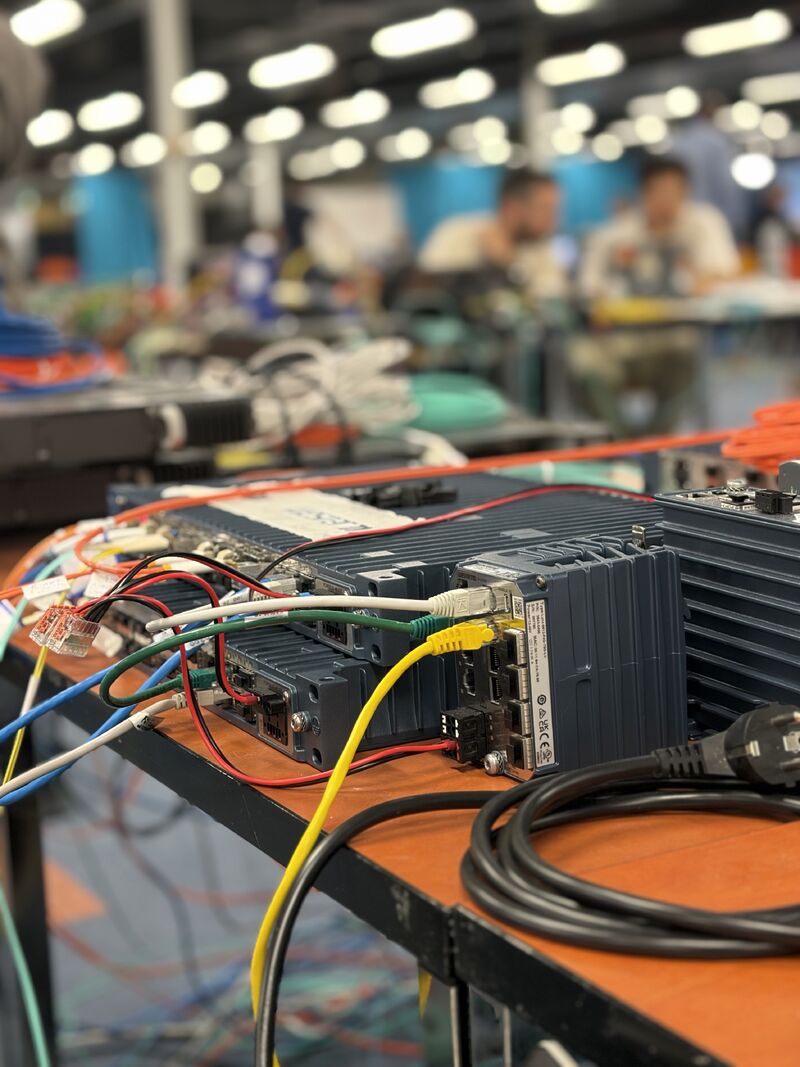
Fig. 1. Westermo networking equipment connected on the IOP test floor. Photo: Westermo / LinkedIn.
Time synchronisation. On 13 October, BitStream’s Dawid Ślimak reported preparations for holdover tests, which examine timing performance after the primary reference is lost.
A photograph published by Sebastian Huante Paredes shows the PTP setup (Fig. 2). The whiteboard records clock identities, master/slave roles, Priority1 settings and domains 90 and 93 across two timing networks. It also lists Toshiba, Hitachi, SEL, CONPROVE and Grid to Great under “Slaves Test #2”. This is configuration information, not timing-error measurements or pass/fail results.
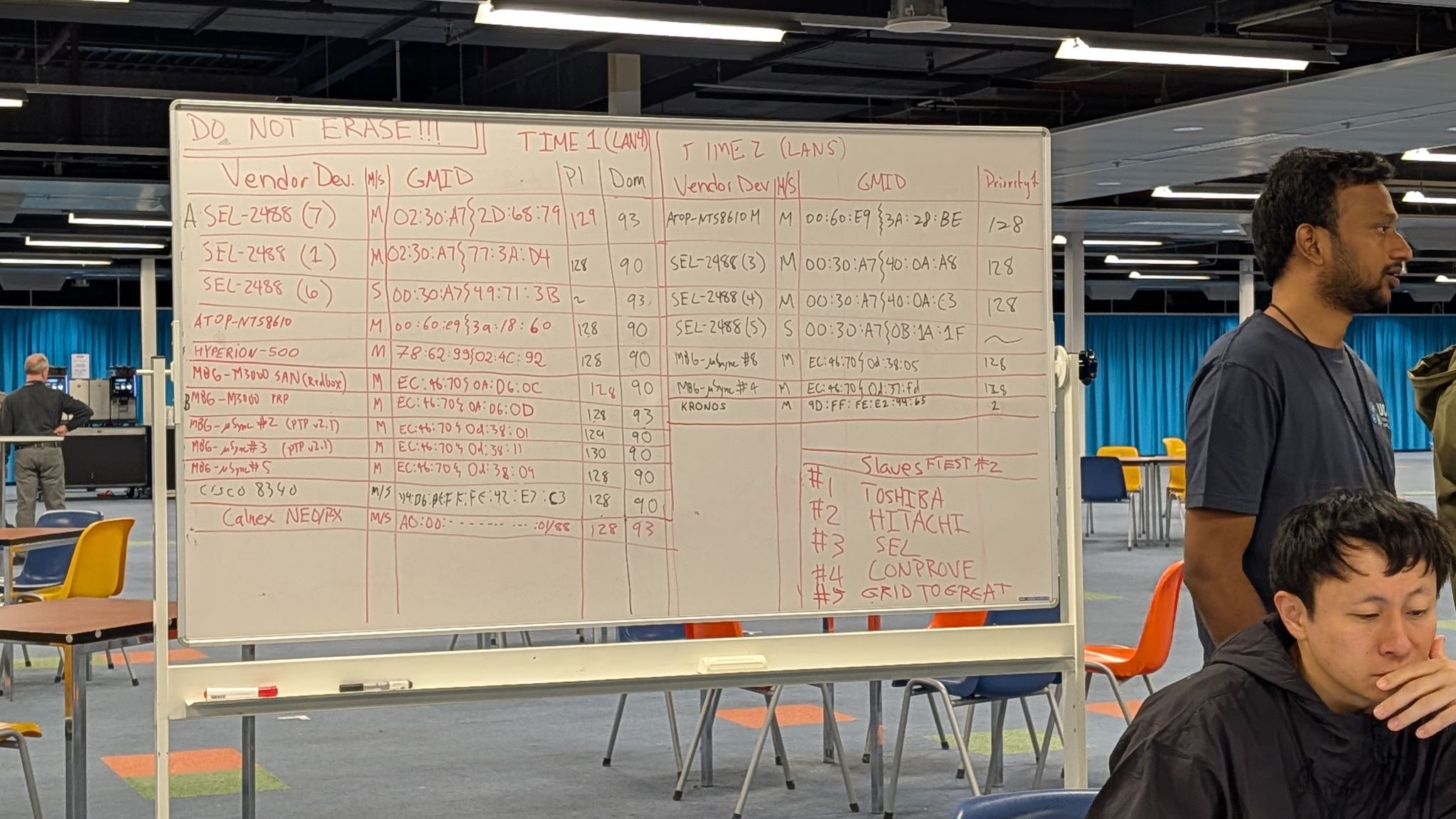
Fig. 2. PTP test configuration recorded on the whiteboard. Photo: Sebastian Huante Paredes / LinkedIn.
Digital Substation will continue to follow the testing in Utrecht, bringing readers further reports from participants and examining the findings as they become available—with a focus on what they mean for engineering, commissioning and operating multi-vendor IEC 61850 systems.
Sources
- 2026 event
- published scope
- on-site guide
- attendee agenda
- Moxa’s Raymond Shieh
- ASE
- CONPROVE
- COPA-DATA
- Grid to Great
- Welotec
- UCA International Users Group
- UCA president Ryan Willcockson
- Martin Tetteroo of Croonwolter&dros
- Westermo
- Moxa’s Raymond Shieh
- BitStream’s Dawid Ślimak
- photograph published by Sebastian Huante Paredes
Cover photo: UCA International Users Group / LinkedIn.