The article examines the specifics of implementing Digital Substation (DS) projects using the example of an actual substation. A number of challenges arising at all stages of construction and commissioning the facility into industrial operation are noted. Certain solutions applied within the framework of a specific project are described. Some nuances resulting from the use of devices from different manufacturers are also highlighted.
In the electric power industry, various solutions for the digitalization of the sector are actively being implemented, including in the field of relay protection and automation (RPA). A key aspect is the creation of a process bus in accordance with the IEC 61850 standard. Some aspects regarding the practical application of digital information described in Chapter 9-2 of standard [1] have been reflected in IEC 61850-9-2LE [2].
NPP "Ekra" has a track record of successfully implementing a number of projects for digital substations in both pilot and industrial operation. In the summer of 2018, OJSC "Setevaya Company" decided on the necessity of upgrading the under-construction Portovaya substation to a digital one. The fact that the decision to construct the facility as a digital substation was made at a rather late stage significantly affected the timelines for manufacturing, delivery, and commissioning of the equipment.
Process Bus
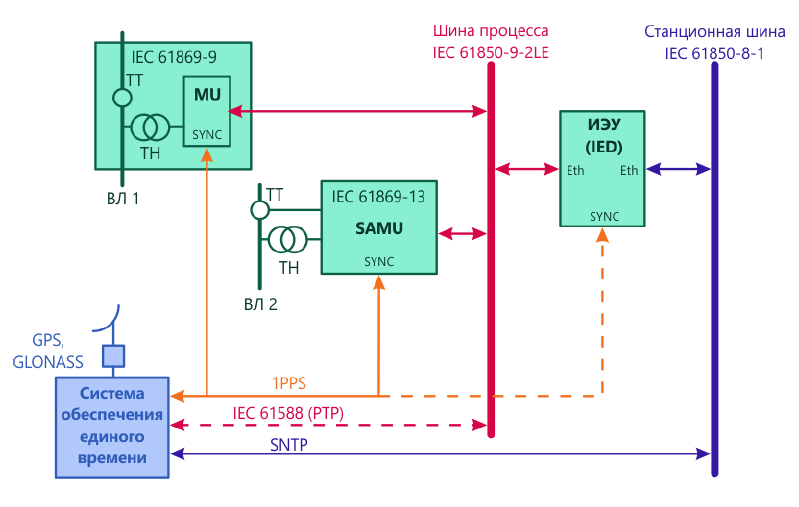
Fig. 1. Diagram of the organization for obtaining digital samples by intelligent electronic devices (IEDs) using ASUs and IASUs
Obtaining digital information about currents and voltages of various connections in a digital substation is carried out using analog signal converters (ASU) or — when using electromagnetic CTs (current transformers) and VTs (voltage transformers) — autonomous analog signal converters (IASU) (see Fig. 1).
The acquisition of digital samples of analog quantity signals in ASUs and IASUs is performed using analog-to-digital converters (ADC). The simultaneous recording of digital samples for all electrical quantities used allows for the exclusion of uncertain phase shifts in the processed signals. The IEC 61850 standard provides for the use of local synchronization for protections operating within a single substation, or global synchronization, for example, for protections consisting of two semi-units installed at different substations.
As is well known, to exchange data between RPA devices and interface units (IU), such as ASUs, IASUs, and discrete signal converters (DSC), communication equipment is used, which forms the so-called process bus and station bus. Synchronization can be performed using a separate bus (1PPS, IRIG-B protocols) or by using an existing Ethernet network (process buses) via the PTPv2 protocol described in the IEC 61588:2009 standard.
When using PTPv2 as the time synchronization protocol for network organization, managed switches with support for this protocol are used. Currently, domestic manufacturers cannot offer suitable equipment, and, as practice has shown, the delivery period for switches can range from one month to half a year.
In the case of the "Portovaya" Digital Substation (DS), shortly before the planned shipment date, concerns arose that the communication equipment might not be delivered within the required timeframe. A decision was made to change the switch manufacturer to reduce the lead time as much as possible. Thanks to the professional work of specialists at all stages of equipment delivery, these potential difficulties were avoided.
Comprehensive Testing
One of the well-known advantages of a DS is the ability to conduct comprehensive testing of all equipment (Station Automation System (SAS), Digital Substation (DSS), Relay Protection and Automation (RPA) and telecommunication cabinets), including information interaction via IEC 61850 standard protocols, even before shipment to the customer, directly at the manufacturer's facilities. Provided that the commissioning engineer receives the approved settings, it is possible to perform integrated commissioning during factory acceptance tests. This approach allows for a reduction in time spent on equipment commissioning directly at the site.
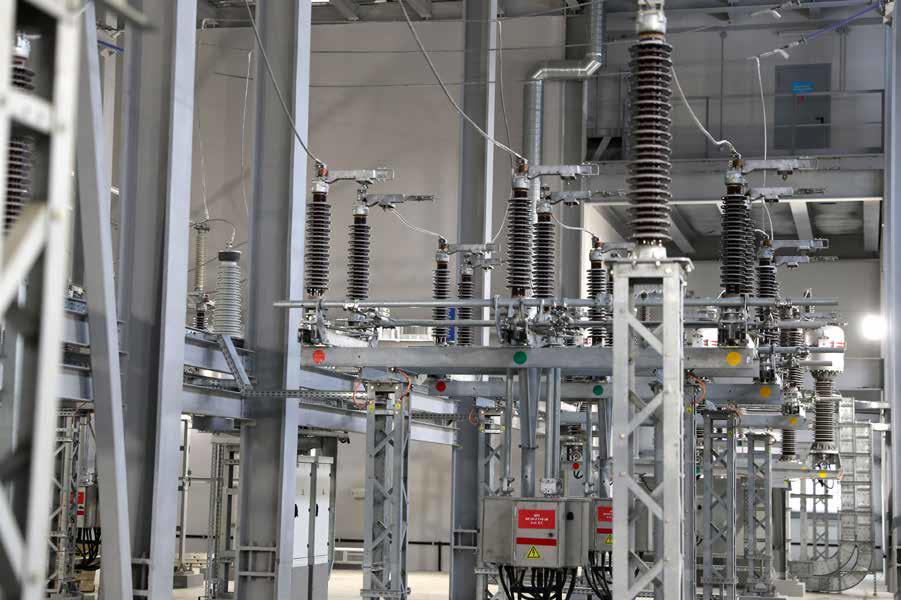
Fig. 2. 110 kV Switchgear of "Portovaya" DS
For the "Portovaya" DS, the RPA (110 kV) cabinets, USOs (Uninterruptible Power Supply Units), and telecommunication cabinets were manufactured by NPP "Ekra". Thanks to the specialists from "Setevaya Kompaniya" (Network Company), the approved settings had been obtained by the time the comprehensive testing took place. The combination of the aforementioned facts made it possible to commission the equipment complex providing protection for the 110 kV equipment at the "Portovaya" DS.
The comprehensive testing process was successfully combined with a training process for representatives of the customer—"Setevaya Kompaniya". The particular value of training in this specific format lies in the fact that it is conducted on the actual equipment that will subsequently be shipped to the site.
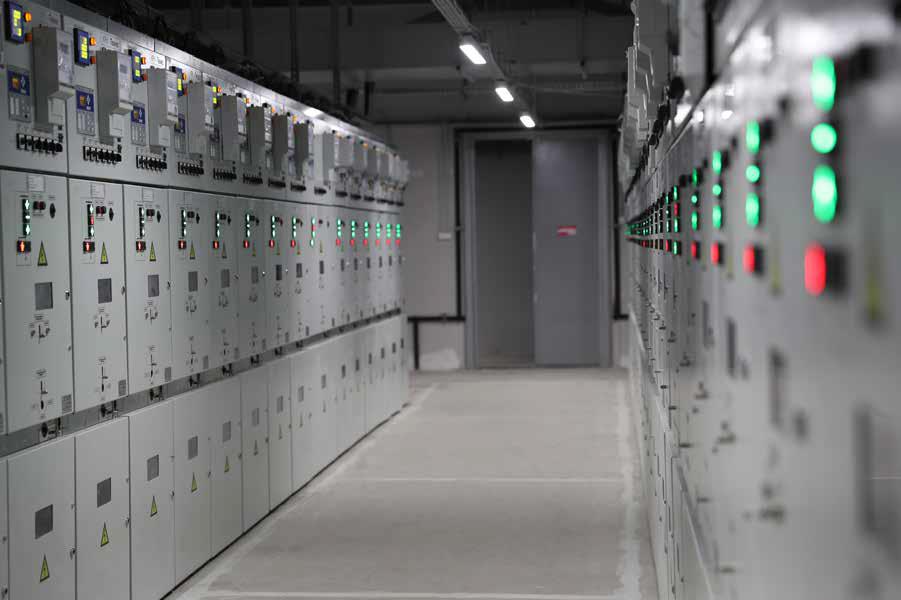
Fig. 3. 6 kV Switchgear of "Portovaya" DS
During the testing, the impact of 6 kV protections was simulated using software and hardware tools. The need to simulate low-voltage protection operations was due to the use of devices from various manufacturers at the substation, which prevents conducting comprehensive testing of all subsystems at the manufacturer's facilities.
Equipment Commissioning
Currently, any DS facility receives close attention at all stages. Interest is evident both from the perspective of equipment customers and operators, and from the perspective of equipment manufacturers, including RPA.
During the commissioning of the "Portovaya" Digital Substation (DS), almost all equipment manufacturers ensured the presence of highly qualified employees. Some manufacturers involved developers directly in the commissioning process, which further confirms the general interest in the topic of DS. Employees of the "Network Company" actively participated in the work at all stages of commissioning.
Despite the requirements for intelligent electronic devices (IEDs) performing Relay Protection and Automation (RPA) functions regarding the ability to export Substation Configuration Language (SCL) files [3], the standard does not define strict rules for the operation of application software performing this function. Discrepancies in the IEC 61850 standard in this regard necessitate certain adjustments, including changes to as-built documentation, when interfacing devices from different manufacturers. As a rule, all arising delays are resolved quite promptly; nevertheless, they would not have occurred if comprehensive testing of all substation subsystems had been conducted beforehand.
Devices from various manufacturers have several operational features. Consequently, operations personnel must not only understand a number of basic issues regarding device operation according to IEC 61850 standard protocols but also take these features into account and possess skills in using different types of application software.
Conclusion
Despite each individual device meeting the requirements of the standard, situations arise where devices from different manufacturers cannot interact correctly.
During the works to energize the "Portovaya" DS, advantages of DS technology were utilized, such as conducting commissioning at operational settings and comprehensive testing of parts of the systems.
When working with devices from various manufacturers, despite each individual device meeting the requirements of the standard, situations arise where devices cannot interact correctly. At the "Portovaya" DS, interoperability between devices from a large number of manufacturers was ensured, which was facilitated by the prompt resolution of equipment compatibility conflicts regarding IEC 61850 communication protocols.
The equipment and software used in a Digital Substation (DS) create new requirements for engineering personnel at all levels, from production to operation. For example, for a Relay Protection and Automation (RPA) engineer to work fully with DS equipment, knowledge of Local Area Network (LAN) operations, time synchronization protocols, and much more is required.
Literature
Communication networks and systems in substations— Part 9-2: Specific Communication Service Mapping (SCL) — Sampled values over ISO/IEC 8802-3. International standard IEC 61850-9-2 Edition 2.0 2011-09.
Implementation guideline for digital interface to instrument transformers using IEC 61850-9-2. UCA International Users Group. 2004.
Communication networks and systems in substations— Part 6: Configuration description language for communication in electrical substation related to IEDs. International standard IEC 61850-6.